
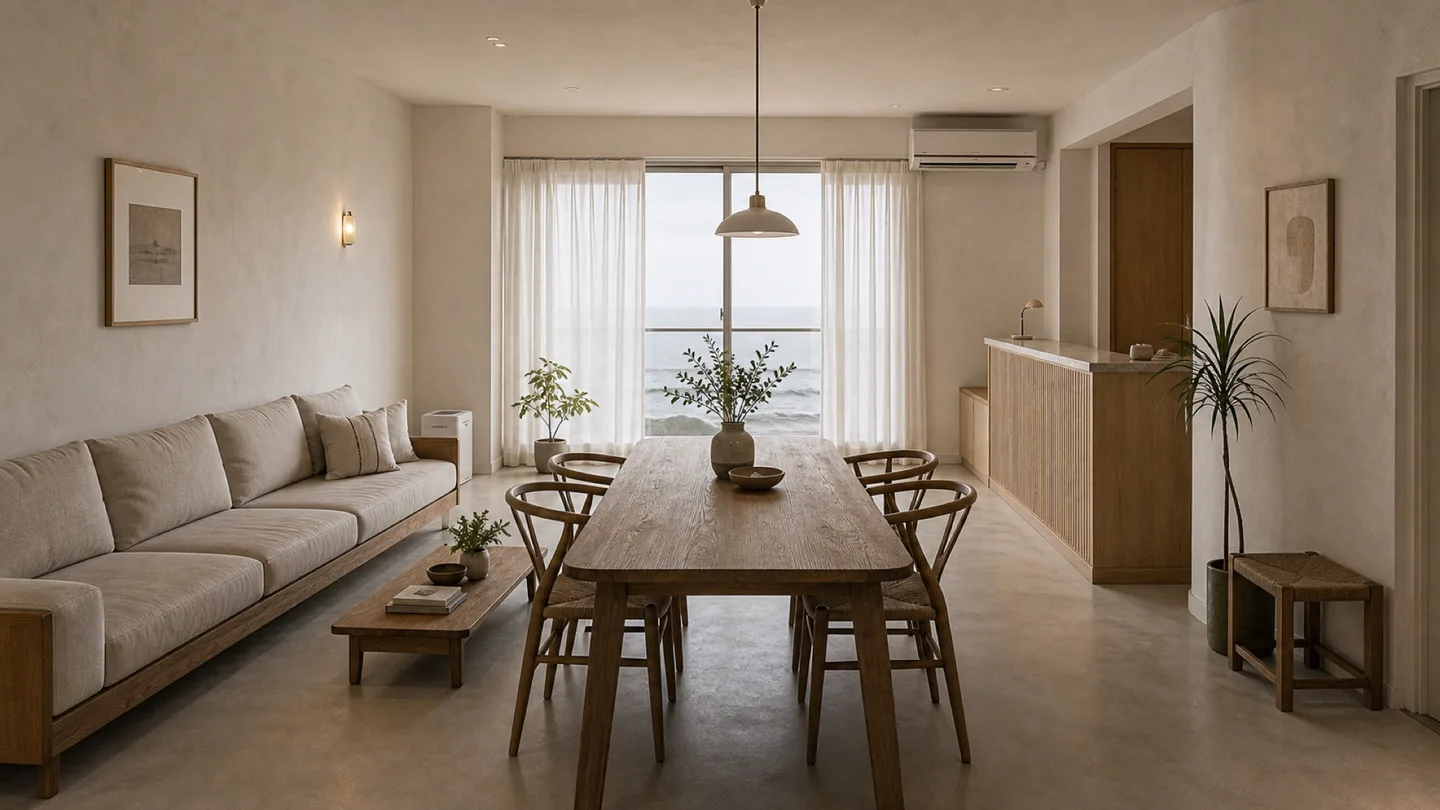
Sparse-view reconstruction is an active research field, but coherent novel views and a faithful reconstruction of an entire home are different acceptance targets. Distinguish multi-view estimation, generative completion and depth assistance. Ten images are not a universal feasibility threshold.
Three approaches with different claims
Sparse-view methods combine relationships between a few images with learned priors. Generative completion can supply plausible unobserved content. Depth assistance adds geometry evidence, subject to sensor quality, alignment and coverage.
A system may combine these approaches. Ask which areas are supported by observations and which are inferred, rather than judging only by input count.
Read research results with their input conditions
MVSplat provides a research example using posed multi-view images and cross-view information to predict Gaussian representations. This does not imply that ten casual photographs can accurately recover an unseen neighboring room.
Read dataset conditions, camera inputs, viewing range and failure cases alongside the demo. A compelling video does not establish dimensional or hidden-structure accuracy.
What a real-space deliverable needs
Label observed, unobserved and generated regions. Use additional images or site records to verify entrances, corners, openings and furniture positions. Dimensional requirements need reference scale and independent checks.
Clearly disclosed creative completion can suit a mood proposal. Remote property viewing, as-built visual records and product presentation need more emphasis on traceable evidence.
Professional capture becomes evidence design
As synthesis improves, professional work includes deciding what must not be guessed, planning coverage, documenting limitations and designing acceptance evidence.
The research direction is to make real spaces easier to understand and verify, rather than treating visual plausibility as proof of complete reconstruction.
Sources and scope
Research synthesis and a proposed diagnostic workflow. Not an unprovided Visuloma case study or benchmark.
Sources checked on 16 October 2026. Capture conditions, methods and versions affect applicability.